
What's in This Guide
Figuring out how to store gemstones isn't about buying a fancy box. It's about matching the storage method to each stone's hardness, chemistry, and sensitivity. I learned this the expensive way — a loose 8mm tanzanite I'd left in the same tray as a sapphire came out with a fresh scratch across the table. That one mistake pushed me to reorganize my entire collection.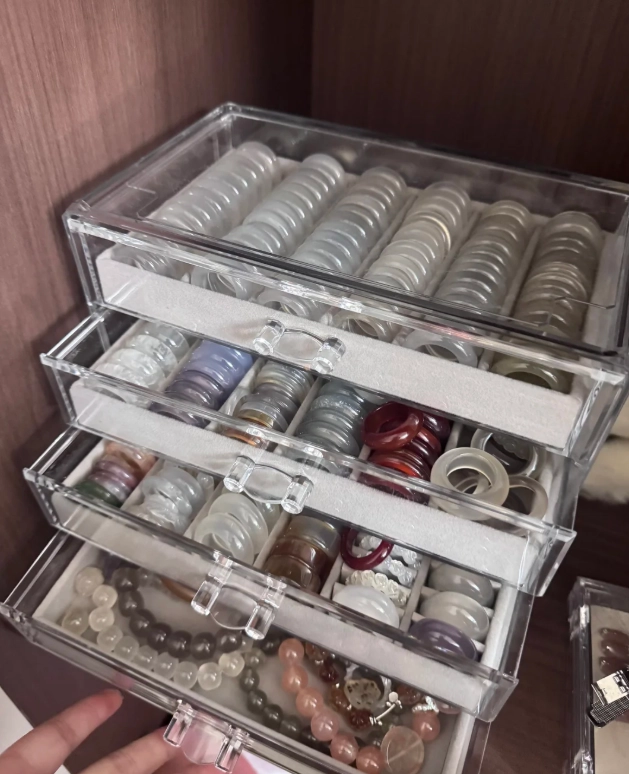
The short version: store each gemstone separately, keep hardness levels apart, keep humidity under control, and never store sensitive stones (opal, pearl, emerald) in dry sealed containers or direct sunlight. Below I break down exactly how I do it now.
Why Mohs Hardness Decides Your Storage Setup
Most guides skip the physics. Gemstones scratch each other based on the Mohs scale, and one point of difference is a big deal. Diamond (10) cuts everything below it. Corundum, meaning sapphire and ruby (9), scratches quartz (7) easily. Quartz scratches feldspar (6). That's why a mixed tray of loose stones is a scratch factory.
| Gemstone | Mohs Hardness | Best Storage |
|---|---|---|
| Diamond | 10 | Individual soft pouch, separate from all others |
| Sapphire / Ruby | 9 | Lined tray with individual compartments |
| Topaz | 8 | Soft pouch, keep away from quartz and harder stones |
| Quartz / Amethyst | 7 | Soft pouch or padded tray |
| Opal | 5.5–6.5 | Padded pouch with a small humidity source; never dry-sealed |
| Pearl | 2.5–4.5 | Soft silk pouch, away from acid and dryness |
| Emerald | 7.5–8 | Individual pouch; avoid ultrasonic and heat |
Here's the non-obvious part: hardness alone doesn't tell the whole story. Emerald is hard enough to resist scratching, yet it's brittle with inclusions — it chips easily on impact. Opal and pearl are soft, but their real enemy is dehydration. So you end up with two different storage problems: abrasion risk and chemical or moisture sensitivity.
Specific Storage Methods I Use and Recommend
Method 1: Individual soft pouches for every loose stone
My go-to is a cotton or velvet pouch per stone, labeled on the outside with a fabric marker. I use 3x4 inch pouches — big enough for an 8mm stone, small enough that it doesn't rattle around. Larger stones get a pouch with a padded interior. This is the cheapest fix and it solves 80% of scratch problems.
Method 2: Compartmented gemstone trays for collection pieces
For stones I check regularly, I keep them in a wooden tray with felt-lined compartments. The trick I use: line each compartment with a piece of acid-free tissue and write the stone name on the tissue. That way I'm not digging through six pouches to answer a customer question. Trays work best for harder stones; softer ones still need pouches inside the tray.
Method 3: Climate-controlled storage for high-value stones
A stone worth several thousand dollars deserves more than a drawer. I keep my top pieces in a small safe with a humidity control pack (around 45–55% relative humidity). Too low and opals craze; too high and you risk moisture damage on certain stones.
Practical tip from experience: don't trust the humidity pack's color indicator alone. I check mine with a cheap digital hygrometer every few weeks. The pack still looked blue when the reading was 38% — that's enough to crack an opal.
Humidity, Light, and the Traps Most People Miss
A gemstone's color can fade. This is real and documented — amethyst darkens or fades with prolonged UV exposure, and some pink and yellow stones are sensitive too. The Gemological Institute of America's educational materials on gemstone care note color stability as a genuine concern for certain species.
So what's the storage rule? Keep display cases out of direct sunlight. A north-facing display cabinet is ideal. If you must show pieces in a lit case, use LED lighting and a timer. The classic trap is the beautiful glass display near a south-facing window — the stones look great right up until the color noticeably changes.
What I do differently: I don't store pearls in the bathroom or kitchen. Heat and steam damage nacre. My pearl strands go in a silk pouch inside a box in the bedroom closet, away from vents and windows.
Common Storage Mistakes I See All the Time
These come up repeatedly once you're handling collections:
Mistake 1: Storing everything in one jewelry box. The classic cause of scratches. Stones knock against each other and against metal settings.
Mistake 2: Sealing opals and pearls in airtight bags. Sounds protective — actually dehydrates them. Opals need a whiff of humidity; pearls need moisture balance.
Mistake 3: Ignoring the setting. A gold ring with a diamond is fine to store in a pouch, but the gold itself scratches softer gems. I keep finished pieces in individual pouches too, not just loose stones.
Mistake 4: Using paper towels or newspaper wrap. Paper fibers can scratch polish and carry acid. Use acid-free tissue, cotton, or velvet only. I've seen a client's opal pick up a fine surface haze from plain tissue paper.
Mistake 5: Storing stones in direct desk drawer light. Less common but real — a north-facing drawer is safer than one right under a lamp.
One more thing. I don't store my garnets and peridots in the same tray as quartz unless they're all in pouches. Garnet scratches quartz less than quartz scratches garnet, but the difference is small enough that I just don't risk it. Lazy storage costs more in repairs than good pouches cost upfront.
Real Questions From Collectors
Storing gemstones well isn't complicated, but it does require paying attention to hardness, humidity, and light. Once you set up pouches, trays, and a humidity-controlled box, the routine becomes automatic. My own rule now: every loose stone gets a pouch, every sensitive stone gets humidity awareness, and no stone sits in direct UV light long-term. Also worth checking with sources like the American Gem Society's care resources if you're unsure about a specific species — but the basics above will protect most collections.
Fact-check note: this guide reflects hands-on storage practice and published gemological care information; specific humidity recommendations vary by species and should be verified for valuable stones.
Comments
Leave a Comment