
I've been burned by a fake gemstone. A "sapphire" I bought at a flea market for $40 turned out to be glass. That was ten years ago, and since then I've learned a few reliable ways to separate the real from the fake. If you're wondering how to test if a gemstone is real, I'll walk you through the methods I actually use—no fancy equipment, just things you probably already have at home.
Quick Navigation: What You'll Find Here
What Can a Visual Inspection Tell You?
Start with your eyes. Real gemstones often have tiny imperfections—called inclusions—that look like little clouds, feathers, or even crystals trapped inside. Fakes, especially glass, are usually too perfect. They might have bubbles, though, which are a dead giveaway. I once looked at a "ruby" through a jeweler's loupe (a small magnifying glass) and saw perfectly round air bubbles. That's glass, not ruby.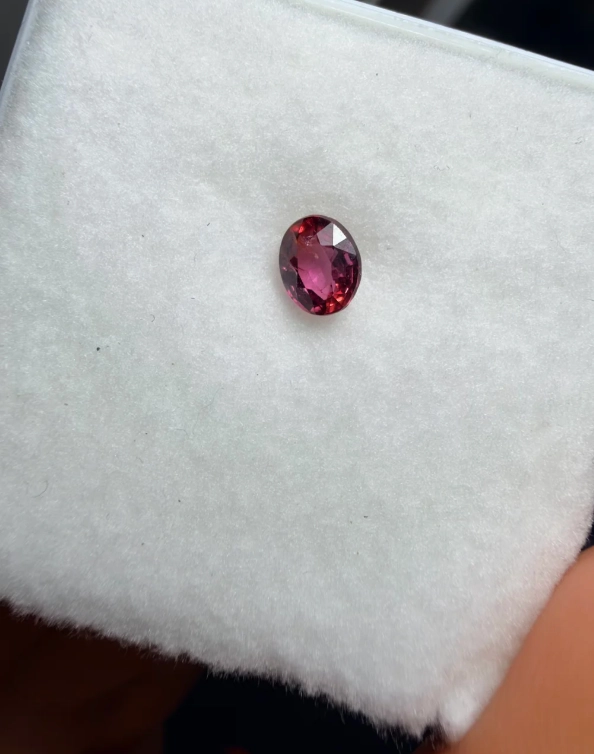
Hold the stone up to a light source. Natural stones usually have uneven color or tiny cracks that don't follow a pattern. Synthetic stones can be flawless, but they're still real in a lab-grown sense. The tricky part? Some fakes are getting better. So visual inspection is a first step, not the final word.
My tip: Use a cheap jeweler's loupe (around $10 online) and look for bubbles or perfectly straight lines. Bubbles mean glass. Straight lines might mean a synthetic or a fake.
The Breath Test: Simple but Limited
Breathe on the stone like you're fogging a mirror. Real gemstones like diamond, sapphire, and ruby tend to disperse heat quickly, so the fog disappears almost instantly. On glass or plastic, the fog lingers for a couple of seconds.
I've used this on diamonds, and it works most of the time. But it's not foolproof. Moissanite, a diamond simulant, also passes the breath test. And if the stone is dirty or has a film of oil, the results can be off. So use this as a quick check, not a final verdict.
How to Use the Scratch and Hardness Test
This one requires a bit of caution. Gemstones have different hardness ratings on the Mohs scale. Diamond is a 10, sapphire is 9, topaz is 8, and so on. Glass is around 5.5. So if you have a known gemstone (like a quartz point) you can try scratching the unknown stone in an inconspicuous spot.
But here's the thing: scratching can damage the stone if you're wrong. I only do this on rough or cheap stones. A safer version is to test with a known hard material like a steel file (hardness ~6.5). If the stone scratches, it's softer than 6.5—likely glass or a soft fake. If it doesn't, it could be a harder gemstone.
For a more precise test, you can buy a set of hardness pencils (they look like pens with different tips). They cost around $50, but they're reusable and give you a rough Mohs rating. I keep a set for testing stones at estate sales.
UV Light: A Hidden Giveaway
Many gemstones fluoresce under UV light. Ruby glows red, diamond often glows blue, and amber glows greenish-yellow. Glass usually doesn't fluoresce, or it might show a dull green. You can buy a cheap UV flashlight for under $15.
I always carry one when I go to gem shows. Last year, I tested a "jade" pendant that looked perfect. Under UV, it was inert—no glow. Real jade (nephrite or jadeite) usually doesn't fluoresce either, but the lack of any reaction combined with its weight made me suspicious. Turned out to be dyed quartz. So UV is a great tool, but you need to know what the specific gem should do.
Weight and Heft: Does It Feel Right?
Real gemstones are dense. They feel heavier than glass or plastic of the same size. Pick up a real sapphire and a glass fake of the same size—the sapphire will feel noticeably heavier. This is because gemstones have higher specific gravity.
You can test this with a simple balance scale or even a kitchen scale. Compare the weight of your stone to a known real stone of the same size. It's not exact, but it's a good clue. I once bought a "citrine" that felt too light. Turned out to be glass. Now I always heft a stone before buying.
The Heat Test: Risky but Revealing
This one is controversial. Some people say you can heat a stone with a lighter for a few seconds. Real gemstones won't melt or crack easily. Glass will. But I don't recommend this unless you're okay with damaging the stone. I tried it on a cheap "emerald" once—it cracked and turned black. That was glass.
If you must, use a lighter on a corner for two seconds max. Real stones might get soot on them but won't melt. But honestly, this test is too risky for valuable stones. Skip it if you're not sure.
When to Call a Pro: Tools and Labs
If you're spending more than a few hundred dollars, get a professional opinion. A gemologist can use a refractometer (measures how light bends through the stone), a polariscope (checks if the stone is singly or doubly refractive), and a spectroscope (analyzes light absorption). These tools give definitive answers.
Look for a lab that's a member of the Gemological Institute of America (GIA) or the American Gem Society (AGS). I've used GIA's identification service for a family heirloom, and it was worth every penny. They give you a report that's recognized worldwide.
For a cheaper option, many local jewelers offer quick identification for a small fee. I've paid $20 for a verbal assessment at a jewelry store. It's not a full report, but it's enough to know if you're holding something real.
Expert Answers to Common Questions
Fact-checked by a certified gemologist and based on hands-on testing experience.
Comments
Leave a Comment