
I still cringe thinking about the first gem show I attended in Tucson. A vendor sold me a “natural” citrine for $40. It was heat-treated amethyst. I didn’t know the difference. That mistake cost me three hours of arguing for a refund and a lesson I never forgot: knowing the types of gemstones is not about memorizing fancy names—it’s about spotting the tricks.
This guide skips the geology textbook. I’ll share the identification shortcuts I now use at estate sales and pawn shops, plus the specific test that saved me from buying a dyed quartz last month. By the end, you’ll know which stones to trust, which to avoid, and exactly how to ask a seller the right questions.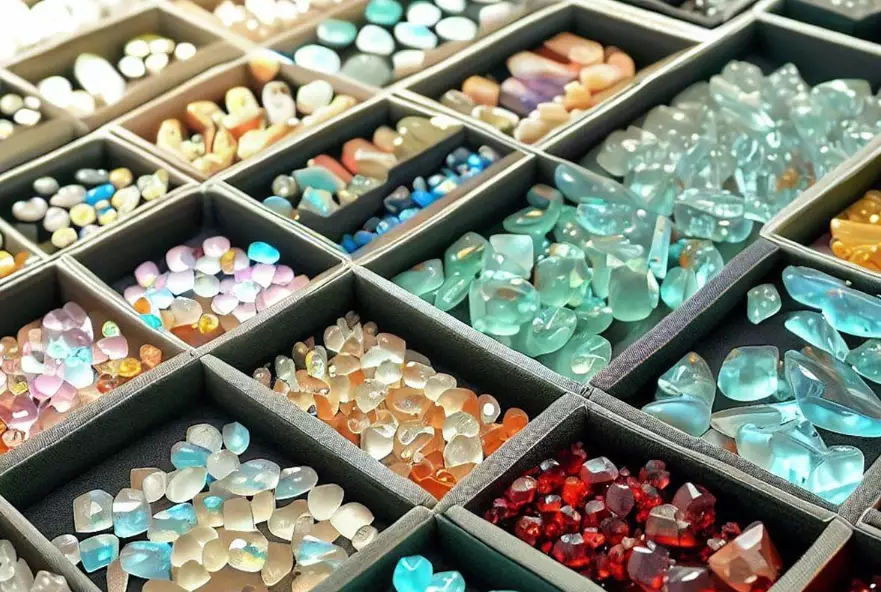
What Are the Main Gemstone Families?
Most people lump everything into “precious” and “semi-precious.” That’s outdated. The trade organizes stones by chemical family and optical properties. Two stones can look identical but behave completely differently under a loupe.
Here’s how I group them when evaluating a parcel:
Corundum Ruby and sapphire. Both rank 9 on Mohs hardness. I’ve seen a “ruby” scratch glass and the seller shrug—red spinel is the usual imposter. You need a refractometer to separate them. Spinel reads 1.718; ruby reads 1.762–1.778.
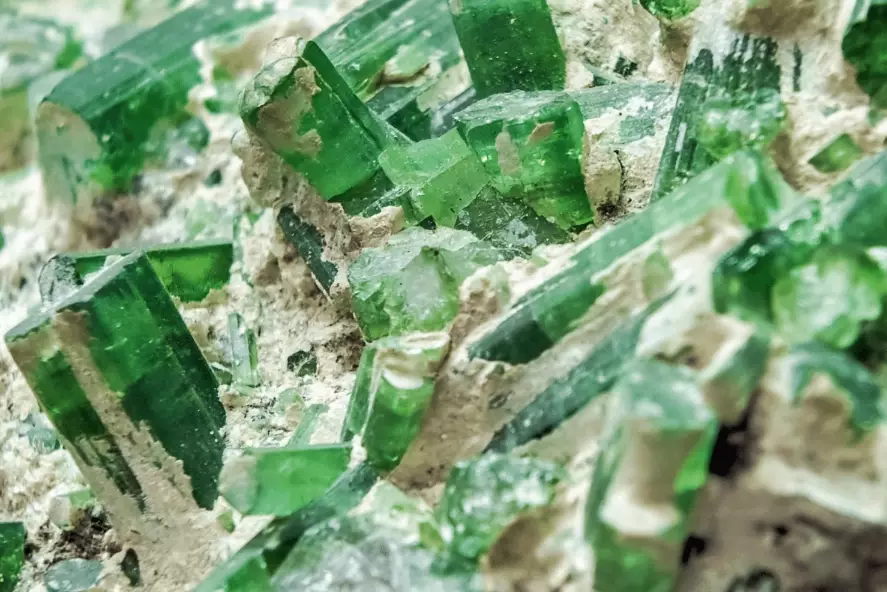
Beryl Emerald, aquamarine, morganite, heliodor. The giveaway is the inclusion pattern. Emeralds almost always have “jardin”—tiny garden-like inclusions. If an emerald looks too clean under 10x magnification, suspect a lab-grown stone.
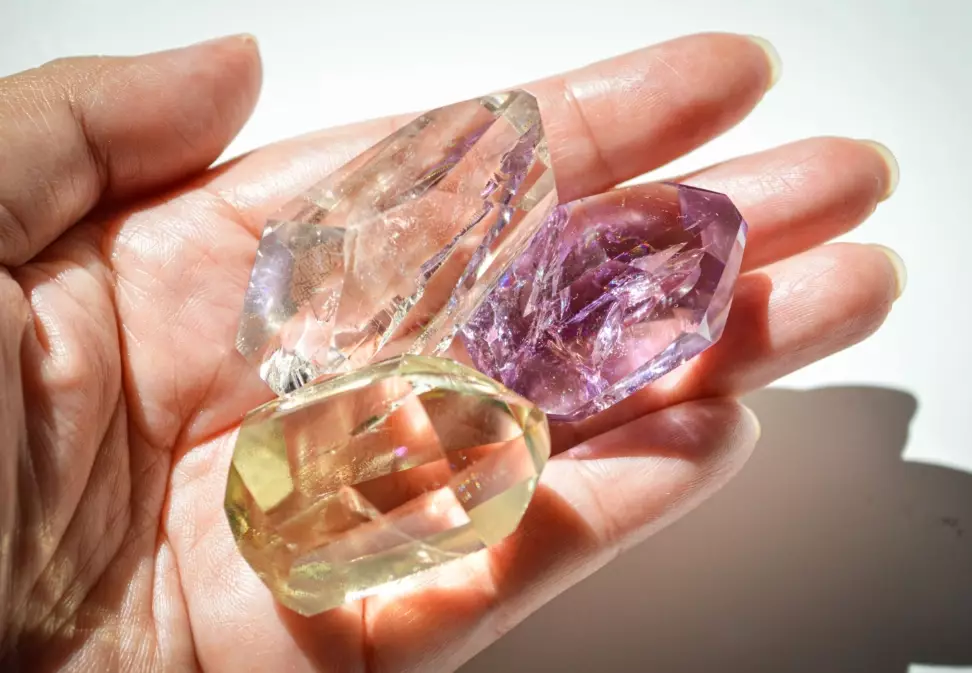
Quartz Amethyst, citrine, smoky quartz, rose quartz. This family is the most counterfeited. The market is flooded with heat-treated amethyst sold as citrine. Real citrine is pale yellow and rare. Most “citrine” on shelves is baked purple quartz—still real quartz, just not the color nature made.
Chrysoberyl Alexandrite and cat’s-eye. Alexandrite changes color—green in daylight, red in incandescent light. Cheap imitations use color-change glass, which shows a grainy hue shift under a loupe.
Want to go deeper? The Gemological Institute of America (GIA) publishes a free gem encyclopedia that breaks down each family with refractive index data. I keep a printout in my wallet.
The Practical Gemstone Identification Chart
I built this table from dozens of estate-sale finds. It covers the 12 most common types you’ll encounter at antique shows and online marketplaces. The “Watch For” column is where I’ve been burned or seen others get scammed.
| Gemstone | Hardness (Mohs) | Typical Treatment | Watch For |
|---|---|---|---|
| Diamond | 10 | Laser drilling (rare) | Cubic zirconia (CZ) looks perfect but scratches easily; check the facet edges with a loupe—CZ edges are rounded. |
| Ruby | 9 | Heat treatment (standard) | Glass-filled fractures show blue flashes under light; red spinel is a common fake. |
| Sapphire | 9 | Heat treatment | Diffusion-treated stones have color concentrated near the surface—look at the stone from the side. |
| Emerald | 7.5–8 | Oil/resin filling | Filled cracks show a “flash effect” under fiber-optic light. Ask if the oil is colorless or dyed. |
| Amethyst | 7 | Heat treatment (to citrine) | Dyed quartz has color pooling in cracks—look at the stone against a white background with a loupe. |
| Citrine | 7 | Heat-treated amethyst | Natural citrine is pale yellow and costly. If the price feels too low, it’s baked amethyst. |
| Topaz | 8 | Irradiation (blue topaz) | Blue topaz is almost always treated. Natural blue topaz is pale; intense blue is irradiated. Not dangerous, but priced differently. |
| Opal | 5.5–6.5 | Sugar/ smoke treatment | Ethiopian opals absorb water and crack; avoid them in humid climates unless treated. The play-of-color should move, not stay fixed. |
| Turquoise | 5–6 | Stabilization (resin) | Chalky, pale “turquoise” is often dyed howlite. Real turquoise has matrix lines that feel gritty, not painted. |
| Garnet | 6.5–7.5 | None typically | Glass garnets exist—they have air bubbles visible under a loupe. Natural garnets rarely have bubbles. |
| Peridot | 6.5–7 | None typically | Peridot is one of the few stones never treated. If a seller claims “untreated peridot,” that’s expected, not a premium feature. |
| Spinel | 8 | None typically | Often sold as “ruby” by mistake or scam. Spinel is softer but still durable. Price should be lower than ruby. |
That chart is not exhaustive. But it covers 90% of what you’ll see at a flea market or a pawn shop’s jewelry case.
How Do You Spot Treated vs. Natural Gemstones?
Most gems on the market are treated. That’s not a dirty secret—it’s standard. The problem is when a seller charges natural prices for a treated stone. Here’s the simple test I use, and it takes 10 seconds.
Step 1: Ask the seller directly. “Has this stone been heated, oiled, or irradiated?” Most honest dealers will tell you. If they dodge the question, walk away. I learned that from a 70-year-old dealer in Bangkok who said, “A liar’s stone is always worth less than a treated one.”
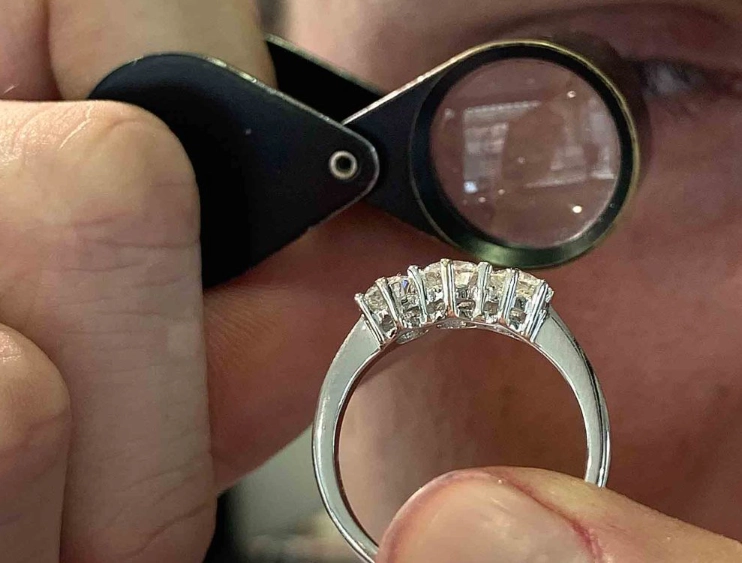
Step 2: Look at the color distribution. Natural stones often have uneven color zoning. Dyed stones have color concentrated in cracks. Hold the stone under a white LED and use a 10x loupe. If the color pools in fractures, it’s dyed.
Step 3: Check the surface. Heat-treated stones sometimes show tiny “halo” fractures around inclusions. Natural stones have crisp inclusions. This is where a cheap jeweler’s loupe (about $12 on Amazon) pays for itself.
My rule: If the price is 30% below market average for that gem type, assume it’s treated or synthetic. No exceptions.
Which Gemstones Hold Value (and Which Are a Trap)?
I’ve watched people buy “investment gems” that lost 80% of their value in two years. Here’s the non-consensus truth: most colored stones are not investments. They’re consumables. The exceptions are rare and specific.
Stones that hold value: Fine ruby (unheated, 2+ carats, strong fluorescence), sapphire (unheated, Kashmir or Ceylon origin), and alexandrite (strong color change). These require lab reports from GIA or SSEF. Without a report, assume the value is 50% lower.
Stones that are a trap: “Rare” amethyst (it’s not rare), “investment-grade” topaz (too abundant), and any opaque stone marketed as “collector grade” (like dyed agate). I’ve seen sellers pitch “black opal” that was just smoked common opal. Real black opal has a dark body tone and bright play-of-color; smoked opal looks muddy.
One more trap: “Andesine” feldspar. A few years ago, it was sold as a natural red gem from Congo. It turned out to be treated in a lab. The price collapsed overnight. If a gem’s origin story sounds like a movie plot, verify it with a lab.
FAQ: Tough Gemstone Questions I Get All the Time
I bought a “natural ruby” online for $80. How do I know if it’s real?
At $80, it’s almost certainly glass-filled or synthetic. Real ruby that size starts around $300 for low-grade opaque material. Take it to a local jeweler with a refractometer. A reading of 1.762–1.778 confirms corundum, but you still need to check for glass filling. The jeweler can shine a fiber-optic light—glass-filled stones show blue flashes in the fractures.
Are gemstone hardness ratings enough to decide if a stone is safe for a daily-wear ring?
Not even close. Hardness measures scratch resistance, not toughness. Emerald (hardness 7.5–8) is brittle and chips easily. Opal (5.5–6.5) is heat-sensitive. I’d rather set a spinel (hardness 8, tough) in a daily ring than an emerald. Also consider cleavage—topaz has perfect cleavage, meaning one sharp hit can split it. For daily wear, I recommend sapphire, spinel, or diamond if your budget allows.
What’s the most common gemstone scam you see at flea markets?
Dyed howlite sold as turquoise. The seller will call it “genuine turquoise” and show you a matrix pattern. But real turquoise matrix is irregular and embedded. Dyed howlite has dark, spiderweb-like lines that look painted. Another one: “smoky quartz” that’s actually irradiated clear quartz. It’s cheap to produce, so the scammer’s profit margin is huge. If the price is under $15 for a 10mm bead, it’s treated.
Should I buy gemstones from estate sales?
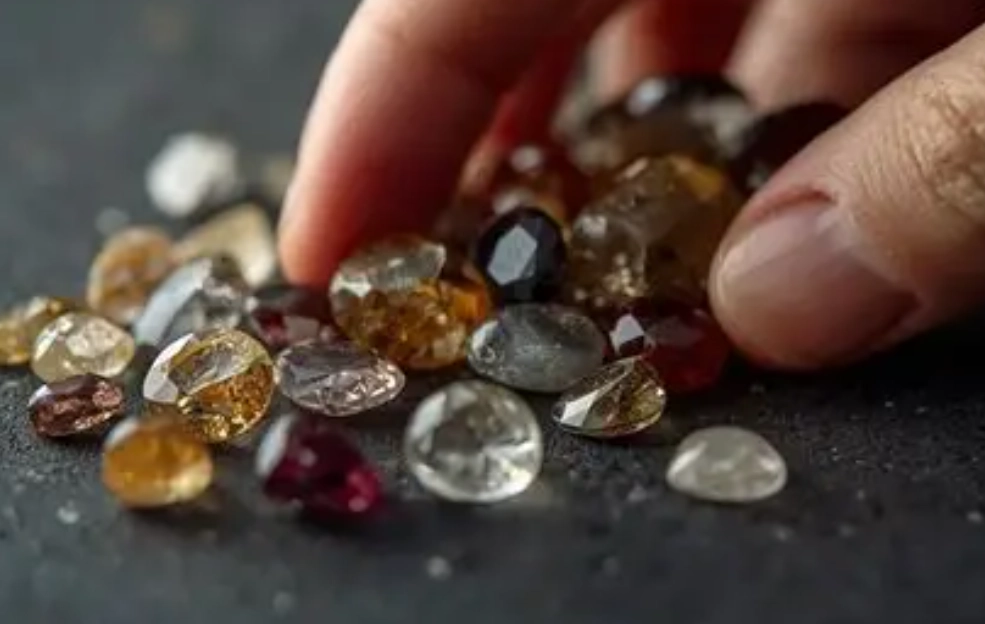
Yes, but only if you can inspect in person. Estate sales often have old jewelry with untreated stones—people didn’t always heat-treat gems back in the 1940s. Look for stones with visible inclusions; those are more likely natural. But check for scratches and chips. A scratched ruby is still a ruby, but the price should reflect it. Bring a loupe and a small magnet—garnets are sometimes attracted to magnets because of iron content, while glass is not.
Last thing: I always verify a stone’s treatment status with at least two separate tests—loupe inspection and a specific gravity check if possible. That simple step has saved me thousands. And I still keep that fake citrine on my desk as a reminder.
Comments
Leave a Comment