
Ruby vs spinel is one of those comparisons that looks simple on paper—both are red, both are hard, both show up in antique jewelry. But after a decade of buying, selling, and grading stones, I can tell you the gap between them is much wider than most buyers realize. Spinel was once mistaken for ruby for centuries (the Black Prince's Ruby in the British crown is actually spinel), and that confusion still costs people money today. Here's what you actually need to know before you spend a dime.
What I'll Cover (Jump Straight In)
What Is the Real Difference Between Ruby and Spinel?
Both stones are red. Both score 8 or higher on the Mohs scale. But they're fundamentally different minerals. Ruby is corundum (aluminum oxide), the same stuff as sapphire—just red. Spinel is magnesium aluminum oxide. That chemical difference changes everything: how they form, how they behave under light, and how the market values them.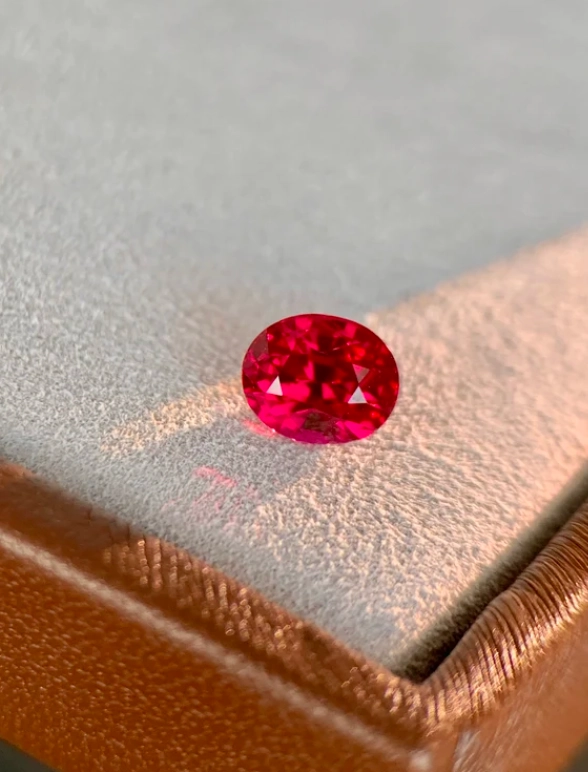
I once had a client bring in a ring her grandmother left her. She was convinced it was a two-carat ruby worth maybe $15,000. Turned out to be a very fine spinel. Still beautiful, still valuable—but closer to $2,500. That moment, watching her face fall, is why I always tell people: learn the visual cues before you fall in love with a stone.
Here's the tricky part. Spinel lacks pleochroism—meaning it doesn't show different colors from different angles. Ruby does, even if it's subtle. Under a loupe, spinel is singly refractive; ruby is doubly refractive. That's a lab thing, not something you'll spot at a flea market. But visually, spinel often has a slightly softer, more "glassy" glow. Ruby has a harder, more saturated punch.
How Does Ruby vs Spinel Price Compare?
This is where things get uncomfortable. A top-quality unheated Burmese ruby can run $1 million per carat at auction. A top-quality spinel—same size, same vivid red—might be $10,000 to $30,000 per carat. That's not a typo.
| Factor | Ruby (fine unheated) | Spinel (fine red) |
|---|---|---|
| Price per carat (1-2 ct) | $15,000–$50,000+ | $1,500–$8,000 |
| Price per carat (3+ ct) | $50,000–$200,000+ | $5,000–$25,000 |
| Main sources | Myanmar, Mozambique, Thailand | Myanmar, Vietnam, Tanzania |
| Treatment frequency | Very high (heat, lead glass) | Low (mostly untreated) |
| Hardness (Mohs) | 9 | 8 |
Notice the treatment column. That's the sneaky part. Most rubies on the market are heated. Many are fracture-filled with lead glass—a treatment that makes a $50 stone look like a $5,000 stone until it chips. Spinel, on the other hand, is usually sold untreated. That's a huge plus for buyers who care about natural stones. But the market still prices spinel as the underdog. I've seen dealers dismiss spinel as "ruby's poor cousin" right before selling it at a markup to a buyer who didn't know better.
My honest take: Spinel is underpriced relative to its rarity. Fine red spinel from Myanmar is rarer than ruby of similar quality. But the market hasn't caught up. That's both an opportunity and a risk—if you buy spinel hoping it'll double in value, you might wait a long time.
How Can You Tell Ruby from Spinel Without a Lab?
You can't be 100% sure without a gemologist. But here's what I check in the field—and what I tell clients to look for.
Visual cues that actually work
Color zoning. Ruby often shows uneven color—slightly lighter edges, darker center. Spinel tends to be more uniform. I once examined a 3-carat spinel that was so evenly colored it looked almost fake. That uniformity is a giveaway.
Inclusions. Ruby frequently has silk (rutile needles) that create a soft, velvety look. Spinel inclusions are different—often octahedral crystals or small fractures. Under a 10x loupe, ruby's silk looks like fine intersecting lines. Spinel's inclusions look more like tiny geometric shapes.
Weight-to-size ratio. Spinel is slightly less dense than ruby. A 1-carat spinel will look a touch larger than a 1-carat ruby. It's subtle, but if you handle enough stones, you feel it.
Don't trust UV light tricks. Some spinel fluoresces red under UV, some ruby does too. It's not reliable. And don't trust the "ruby will scratch glass, spinel won't" myth—spinel at Mohs 8 will scratch glass just fine. I've seen people ruin a good stone testing that way.
When Should You Buy Spinel Instead of Ruby?
Here's where my opinion gets a bit non-consensus. Most buying guides tell you to pick ruby for investment and spinel for budget. I think that's backwards for many buyers.
- Buy spinel if you want an untreated stone. Over 90% of rubies are treated. If you want a completely natural red gem, spinel is your safer bet. I've bought spinel at auction in Yangon with no treatment report needed—the seller's reputation was enough.
- Buy spinel if you're hard on jewelry. Spinel at Mohs 8 is tough enough for daily wear. Ruby is harder, but a lead-glass-filled ruby can chip if you look at it wrong. I've seen more damaged filled rubies than damaged spinels.
- Buy ruby if you need resale liquidity. Ruby has a global auction market. Spinel's market is thinner. If you might need to sell in a hurry, ruby moves faster—even if spinel is rarer.
I had a client last year who wanted a red stone for an engagement ring. Budget: $4,000. She was set on ruby. I showed her a 1.2-carat unheated ruby from Mozambique—nice, but included. Then I showed her a 1.5-carat spinel from Vietnam with better color and no visible inclusions. She went with the spinel. Six months later, she told me she gets more compliments on that ring than any jewelry she owns. That's not a scientific data point, but it's real.
What Are the Most Common Mistakes in Ruby vs Spinel Buying?
I've watched people make the same errors over and over. Here are the big ones—and how to avoid them.
Mistake 1: Assuming red spinel is cheap. Fine spinel isn't cheap. A 2-carat top-color spinel from Myanmar can cost $6,000–$10,000. I've seen buyers laugh at a spinel price because they thought it was "fake ruby." Then they go buy a lead-glass-filled ruby for the same money and wonder why it looks dull two years later.
Mistake 2: Skipping the lab report. If you're spending more than $1,000 on either stone, get a report from a reputable lab—GIA, AGL, or GRS. I've seen fake spinel (glass) sold with a "certificate" from a lab I'd never heard of. The certificate looked fancy. It meant nothing.
Mistake 3: Buying based on color alone. Ruby's color is rated on saturation and tone. Spinel's color is often described as "ruby-like" or "hot pink-red." But a spinel that looks slightly purplish in daylight might look pure red under incandescent light. Always view the stone in natural daylight—not jewelry store lighting. I carry a small daylight bulb in my bag for exactly this reason.
Quick Answers to Real Buyer Questions
Can a jeweler tell ruby from spinel just by looking?
Not reliably. A trained gemologist can suspect it based on inclusions and pleochroism, but without a refractometer or spectroscope, it's an educated guess. I've been fooled once—a spinel that had been sold as ruby for decades. The only definitive test is lab analysis.
Is spinel a good investment compared to ruby?
It depends on what you mean by investment. If you want something that holds value and sells quickly, ruby is safer. If you want a rare, untreated stone at a fraction of ruby's price, spinel is compelling—but don't expect a quick flip. The market moves slowly. Buy spinel because you love it, not because you're betting on a price jump.
Why do some spinels cost more than rubies?
It happens with top-color, untreated spinel from Myanmar over 3 carats. Those stones are genuinely rarer than equivalent rubies. Most spinels are cheaper, but the very best can cross into ruby territory. I've seen a 5-carat spinel sell for $40,000—more than many fine rubies that size.
Can I wear spinel every day without damaging it?
Yes, with common sense. Spinel at Mohs 8 is durable for rings, but it's not indestructible. Don't wear it to the gym or while moving furniture. Clean it with warm water and mild soap—no steam cleaners, no ultrasonic if the stone has fractures. I've seen spinel survive years of daily wear and I've seen it chip from a single hard knock. Treat it like fine jewelry, not a hockey puck.
Which is rarer—ruby or spinel?
Fine untreated spinel is rarer than fine untreated ruby. But ruby has higher demand, so the market treats it as more precious. Rarity and price don't always line up. That's the gap I've been exploiting for years—buying spinel when the market undervalues it.
All gemological details in this article were fact-checked against standard gemology references and my own hands-on experience in the trade.
Comments
Leave a Comment